Knitting for Olive – Baby Bear Bonnet – Knitting Kit
Designed by Pernille Larsen – Knitting for Olive
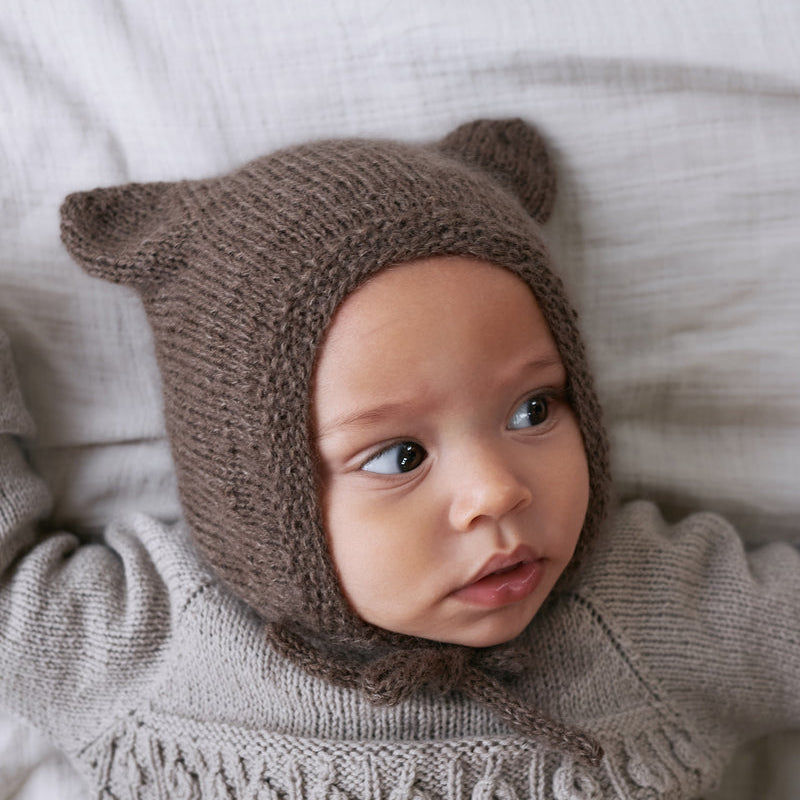
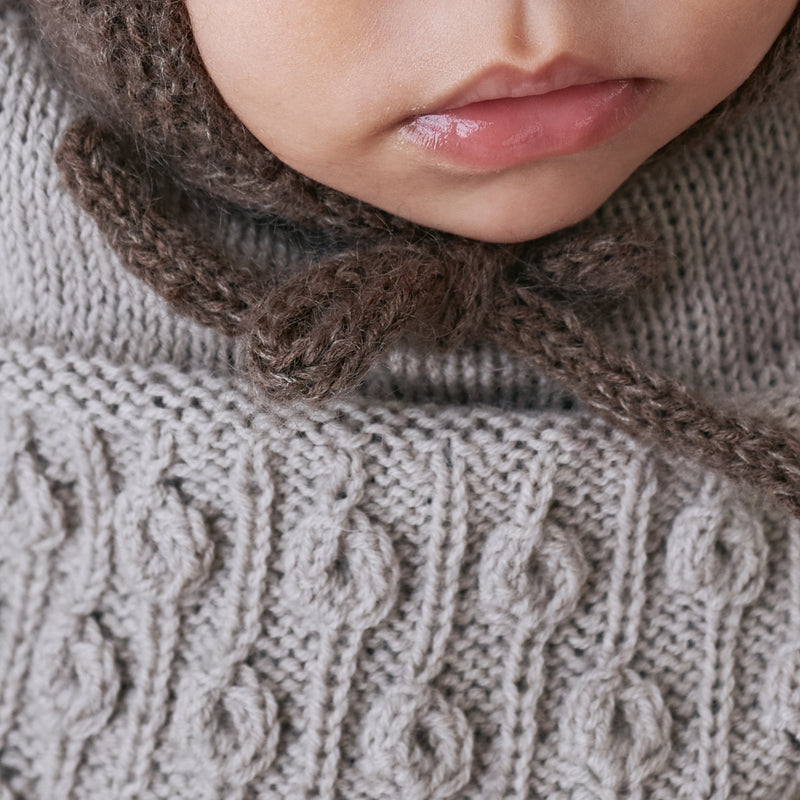
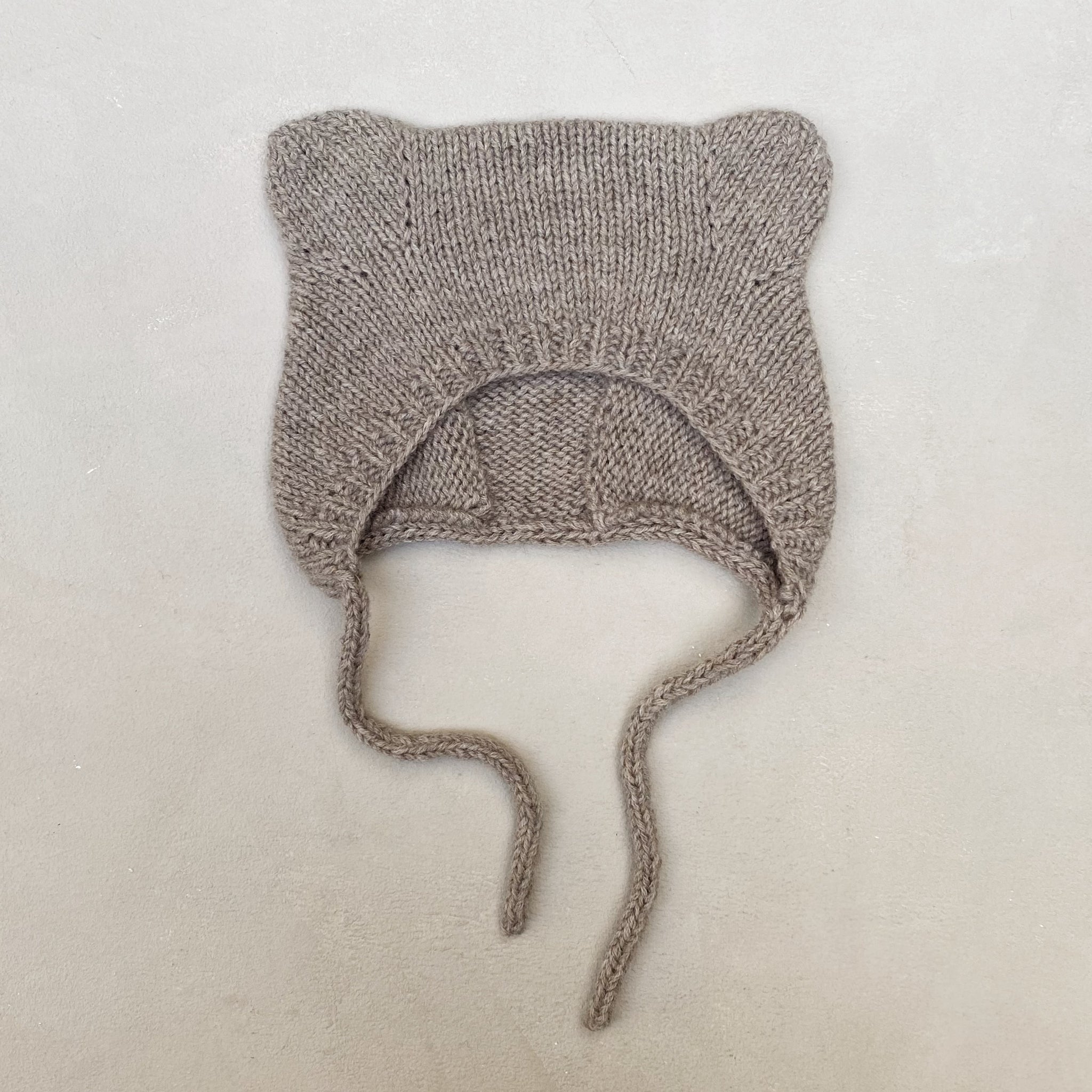
The Baby Bear Bonnet is exactly what it sounds like: a soft little bonnet with two rounded ears on top and long I-cord ties under the chin. It is the sort of thing that gets photographed a great deal and handed down afterwards.
You start at the band, and there is a choice built in: work it in moss stitch or in rib, whichever you prefer the look of. From there the bonnet is worked back and forth in stocking stitch up to the ears, which are shaped as you go rather than added on afterwards. The ear stitches go on hold while you turn the back of the head with German short rows and decreases worked at the same time. Each ear is then folded in half and grafted closed.
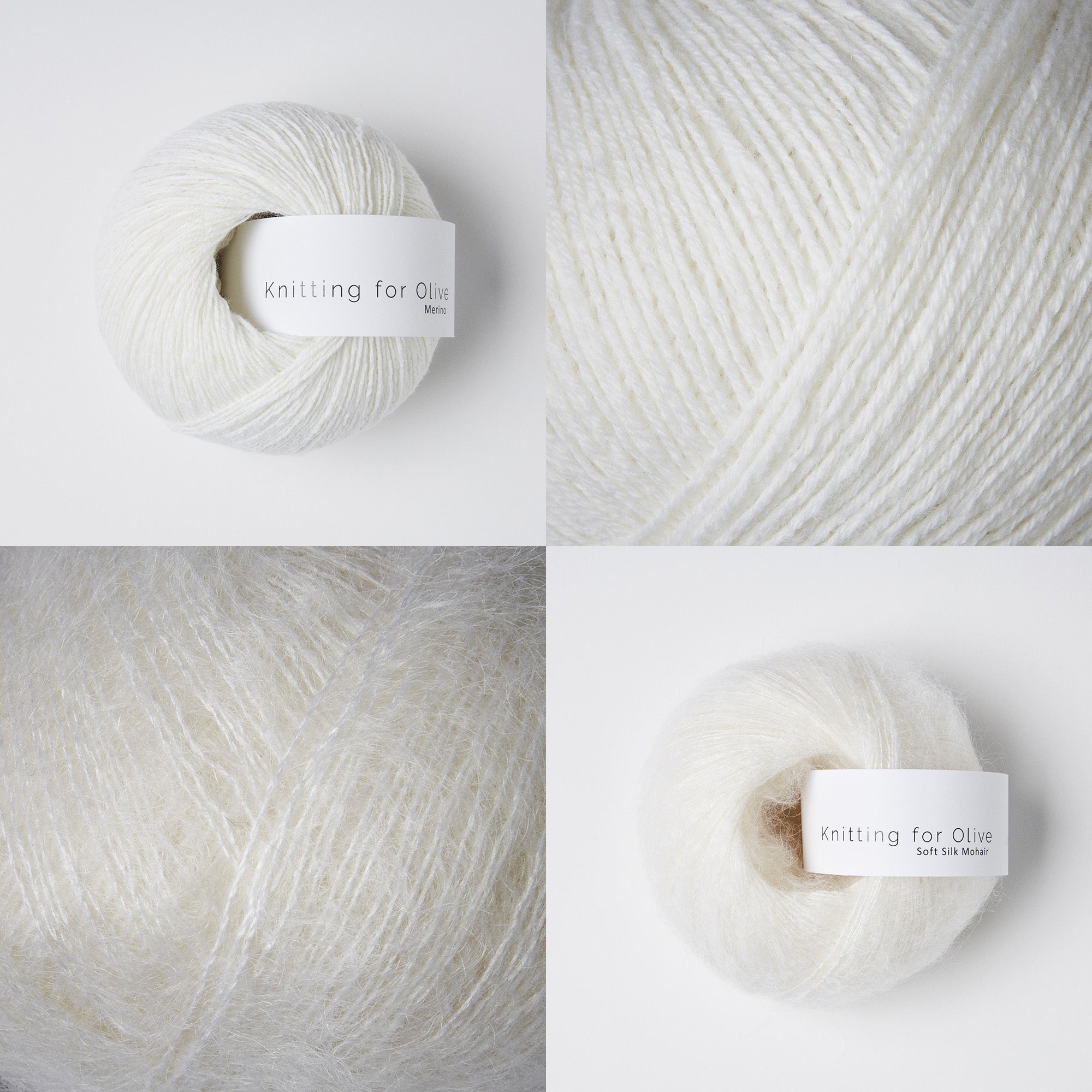
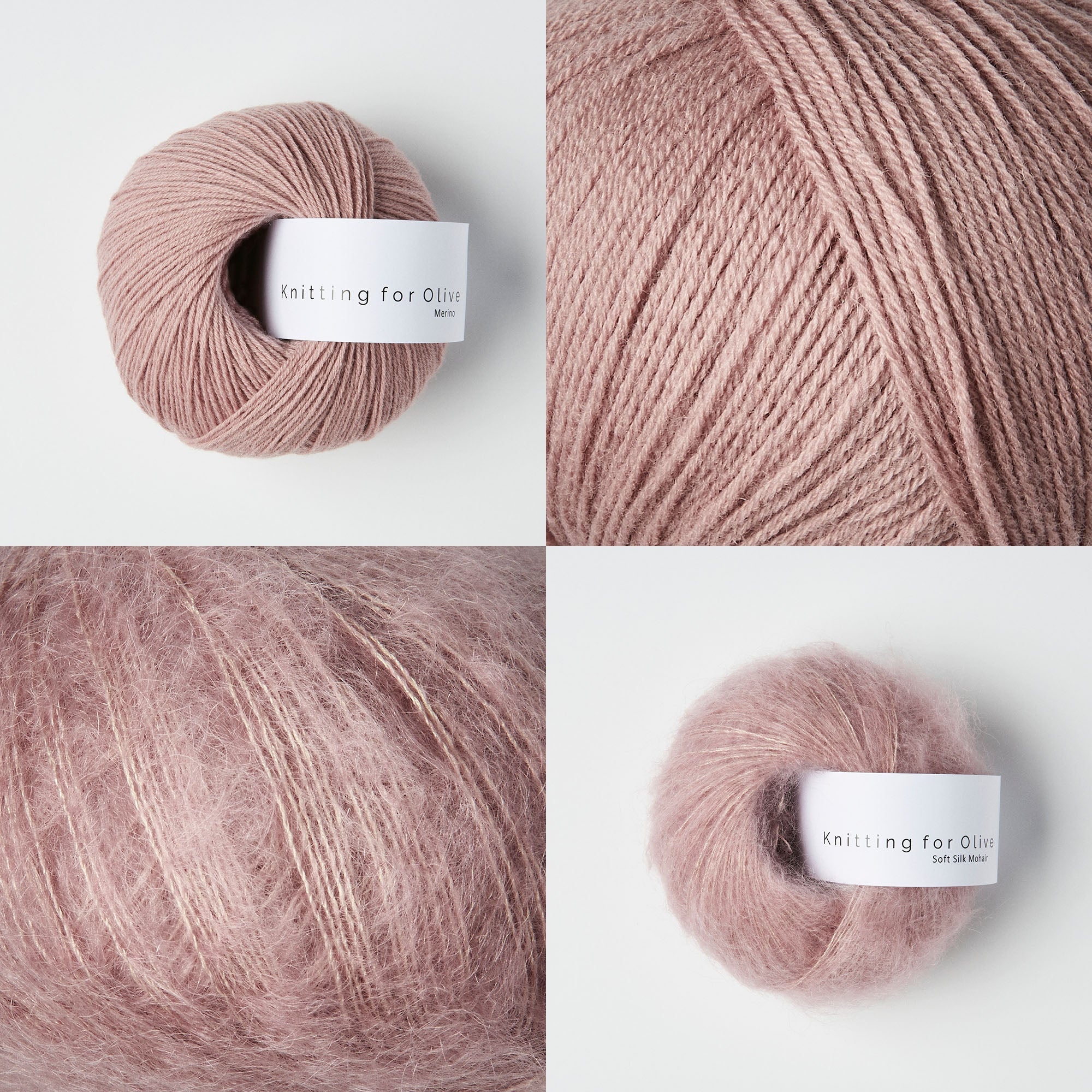
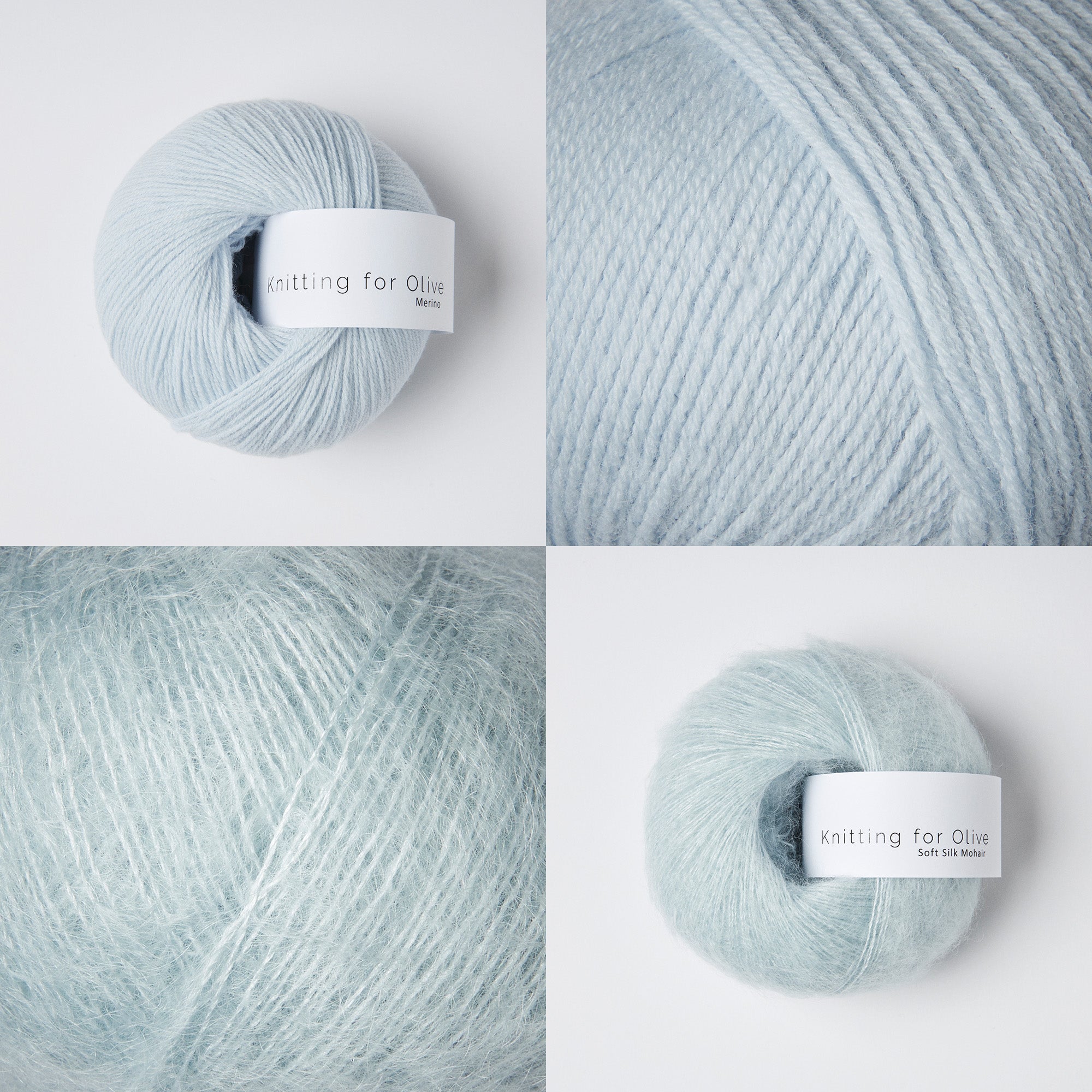
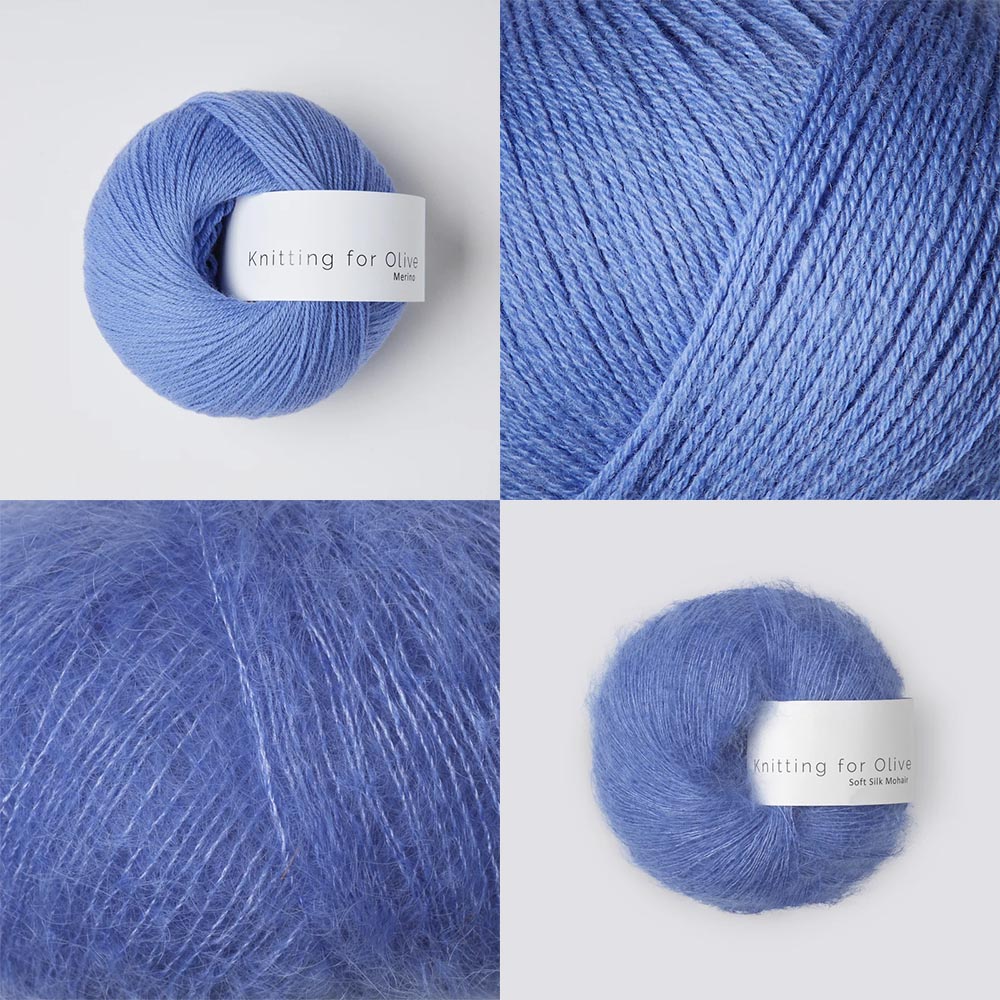
It is knitted with one strand of Knitting for Olive Merino held together with one strand of Soft Silk Mohair. The merino gives the fabric enough body to hold the ears up; the mohair softens everything and puts a faint halo round the edges, which on a bonnet with bear ears is entirely the point.
Skill Level: Intermediate ★★★
There is no chart and the fabric is plain, but a great deal is packed into a small object. The ears are shaped at the same time as the crown, the back of the head is turned with German short rows while decreasing on both sides at once, each ear is grafted closed with Kitchener stitch, and the neck edge is finished with an I-cord bind-off that runs straight out into both ties. None of it is beyond a confident knitter, but this is not a first hat.
Sizes: 1 (3, 6, 9, 12–18, 24) months, to fit head circumference approximately 33-37 (36-40, 39-44, 43-46, 46-49, 49-51) cm, or 13-14½ (14¼-15¾, 15¼-17¼, 17-18, 18-19¼, 19¼-20)"
Gauge: 23 stitches and 34 rows = 10 cm (4") in stocking stitch on 3.5 mm / US4 needles, with one strand of Merino and one strand of Soft Silk Mohair held together.
The Kit Includes
- Knitting for Olive Merino, 1 ball in your chosen colourway
- Knitting for Olive Soft Silk Mohair, 1 ball in the matching colourway
- Printed pattern in English
You'll Also Need
- 3.5 mm / US4 circular needle, 40 cm or 60 cm
- Two 3.5 mm / US4 double-pointed needles
- Stitch markers
- Waste yarn or stitch holders
- A measuring tape
A note on the needles
Two different needles, for two different jobs. The bonnet is worked back and forth on the circular, which you use like a short straight needle. The stitch count grows from about 50 at the cast-on to as many as 124 at the widest point, so 40 cm will do for the smaller sizes and 60 cm is more comfortable for the larger ones. The two double-pointed needles do the finishing: the I-cord ties, and holding each ear folded in half while you graft it. You do not need a full set of five.
Techniques used
- Moss stitch or rib, your choice, for the band
- Stocking stitch worked back and forth
- M1R and M1L increases to shape the ears
- German short rows, with decreases worked at the same time
- Holding stitches on waste yarn
- Picking up stitches along an edge
- Kitchener stitch to graft each ear closed
- I-cord ties and an I-cord bind-off
Why You'll Love It
- One ball of each yarn covers every size in the range, so there is nothing to work out whichever age you are making it for.
- It is small. A few evenings and you have made something properly nice.
- The ears are shaped into the knitting rather than sewn on, so there is nothing to come loose in the wash.
- Merino and mohair next to a baby's head, with no scratch to it at all.
- Six sizes from one month to two years, and the ties mean it stays on a head that would push a hat straight off.